
My doctor, my torturer
Would your doctor knowingly participate in torture? Jokes about colonoscopies aside, of course not, right? Well...maybe not, at least not if said doctor is present at an interrogation.
Last year, researchers at Harvard asked nearly 2,000 medical students how much they know about medical ethics in military situations, specifically, on the ethical obligations of doctors and nurses when prisoners of war are being interrogated.
The students were asked if a physician would be ethically obligated to refuse an order to participate in an interrogation by 1) threatening to inject the prisoner with a psychoactive drug, 2) injecting the prisoner with a harmless solution which the prisoner believes to be lethal, or 3) actually injecting the prisoner with a lethal drug.
Although all three scenarios would be prohibited under the Geneva Conventions, one in three of the students thought that the only circumstance in which they would be ethically required to disobey was when they might cause the death of the prisoner. In any case, more than 100 of the respondents said they would, if ordered, kill the prisoner by injection.
The Geneva Conventions--universally accepted since their promulgation in the wake of Nazi doctors involvement in the Holocaust--ban threatening, coercing, humiliating, degrading, or injuring prisoners of war for any reason, not to mention murdering them. But according to the Bush administration these widely accepted principles don't apply to prisoners we're holding at Iraq-war related prisons such as Abu Ghraib or Guantanamo.
If you want to read the whole medical students study, it was published in the International Journal of Health Services, Volume 37, Number 4, and is available online. For more on the subject of medical complicity in torture, try Minnesota doctor Steve Miles' book, Oath Betrayed: Torture, Medical Complicity and the War on Terror. available on Amazon.
Last year, researchers at Harvard asked nearly 2,000 medical students how much they know about medical ethics in military situations, specifically, on the ethical obligations of doctors and nurses when prisoners of war are being interrogated.
The students were asked if a physician would be ethically obligated to refuse an order to participate in an interrogation by 1) threatening to inject the prisoner with a psychoactive drug, 2) injecting the prisoner with a harmless solution which the prisoner believes to be lethal, or 3) actually injecting the prisoner with a lethal drug.
Although all three scenarios would be prohibited under the Geneva Conventions, one in three of the students thought that the only circumstance in which they would be ethically required to disobey was when they might cause the death of the prisoner. In any case, more than 100 of the respondents said they would, if ordered, kill the prisoner by injection.
The Geneva Conventions--universally accepted since their promulgation in the wake of Nazi doctors involvement in the Holocaust--ban threatening, coercing, humiliating, degrading, or injuring prisoners of war for any reason, not to mention murdering them. But according to the Bush administration these widely accepted principles don't apply to prisoners we're holding at Iraq-war related prisons such as Abu Ghraib or Guantanamo.
If you want to read the whole medical students study, it was published in the International Journal of Health Services, Volume 37, Number 4, and is available online. For more on the subject of medical complicity in torture, try Minnesota doctor Steve Miles' book, Oath Betrayed: Torture, Medical Complicity and the War on Terror. available on Amazon.
posted by PO at
9:18 AM
0 Comments




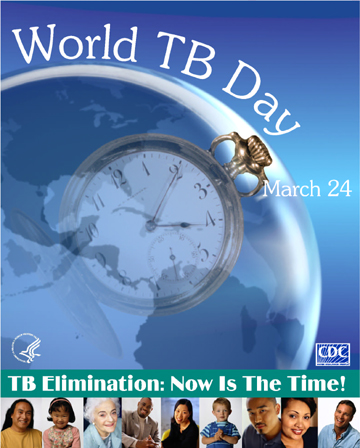 Tuberculosis kills 2 million people a year and sickens millions more. It's a terrible plague in South America, Asia and Africa. Closer to home (although US incidence of the disease declined precipitously after the 50s) there's actually been a 9% increase in each of the past two years, in the number of cases in Minnesota. And if you worry about super-bugs, try reading about "MDR TB"—tuberculosis that is resistant to many or all of the known treatments. Good reason to support the CDC and state health department in their efforts to de-stigmatize TB, especially among vulnerable immigrants and refugees. Check out the Minnesota Department of Health's
  He probably saved more lives than were destroyed by Hitler, Mao and Stalin combined." Who?